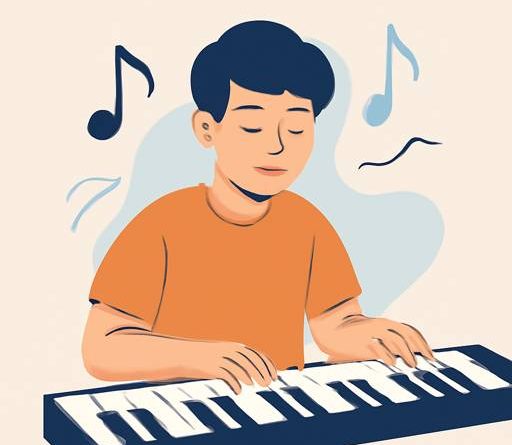
Melodies That Make Sense: Empowering Autistic Learners Through Piano
Why Piano Resonates with Autistic Learners
For many families exploring music education, the piano offers a uniquely structured, inviting entry point. Its layout is visually logical, each note has a stable location, and sound is produced with a simple press—no embouchure, bow grip, or breath control to master first. This predictability can be especially helpful in piano lessons for autism, where consistency, clear cause-and-effect, and reliable feedback support confidence and meaningful engagement.
Beyond accessibility, piano supports whole-brain integration. Coordinating two hands fosters bilateral integration and motor planning, while reading or following patterns strengthens executive function, attention, and sequencing. Rhythmic entrainment—synchronizing movement to steady beats—can help regulate arousal, focus, and body awareness. These benefits compound when lessons are designed around strengths: strong pattern recognition, keen auditory perception, and deep focus on special interests. When an educator validates stimming, allows movement breaks, and pairs tasks with favorite themes or visuals, the instrument becomes a safe space rather than a stressor.
Effective piano lessons for autistic child learners also create communication on-ramps. Music-making can become a bridge for students who are non-speaking or minimally speaking, providing an expressive outlet where feelings and ideas are shared without pressure to use words. Structured call-and-response, improvisation on a chosen “mood,” or composing short motifs with color-coded notes can build turn-taking and social reciprocity organically. In addition, note names, rhythm syllables, or visual schedules can integrate with AAC systems so that musical choices are equally accessible through buttons, symbols, or typed text.
Sensory needs are central to success. Many autistic pianists prefer gentler dynamics, felted hammers, or digital pianos with volume control and headphone options. Others seek rich low-frequency vibrations, finding grounding in bass patterns and chordal textures. A responsive teacher can calibrate tone, tempo, and touch to match the learner’s optimal arousal window. Over time, this scaffolding empowers students to self-advocate: choosing lighting, selecting bench height, adjusting metronome volume, or requesting a “quiet pedal” are all acts of agency that generalize beyond the studio. In short, thoughtfully designed piano lessons for autism align musical growth with self-regulation, communication, and autonomy.
Teaching Strategies That Work: From First Note to Flow
Success starts with a clear, compassionate profile of the student. What are their sensory preferences? How do they communicate yes/no, more/finished, and help? Which interests consistently light up motivation? With those insights, a session can weave predictable routines, visual supports, and meaningful choices. Many students thrive with a First–Then structure: “First 2 minutes of rhythm cards, then improv on your space soundtrack.” A visual timer, color-coded keyboards, and labeled “landmark” notes (C or F groups) reduce cognitive load and make navigation concrete.
Incremental skill-building is key. Task analysis breaks goals into bite-sized steps: from isolating a single finger tap, to a five-note pattern, to coordinating both hands on a simple ostinato. Errorless learning prevents frustration by shaping success through guided prompts that fade as skills stabilize. Teachers can alternate “heavy work” piano tasks—firm, full-hand chords—with “light touch” tasks—gentle finger lifts—to support proprioception and fine motor control. Movement breaks, breathing, and reflective listening ensure that regulation remains central rather than a side note.
Choice amplifies buy-in. Allow the learner to select the warm-up pattern, the soundset on a digital keyboard, or the style of a backing track. Integrating special interests—Pokemon rhythms, train-tempo games, or composing a theme for a favorite character—builds intrinsic motivation. Some students benefit from chord-first or ear-first pathways before traditional notation. Lead sheets, number systems, and pattern-based pedagogy keep theory tangible, while notating only what matters avoids visual overwhelm. For others, color-coded staff lines, larger fonts, or Dyspraxia-friendly fingering maps make reading accessible without sacrificing musicality.
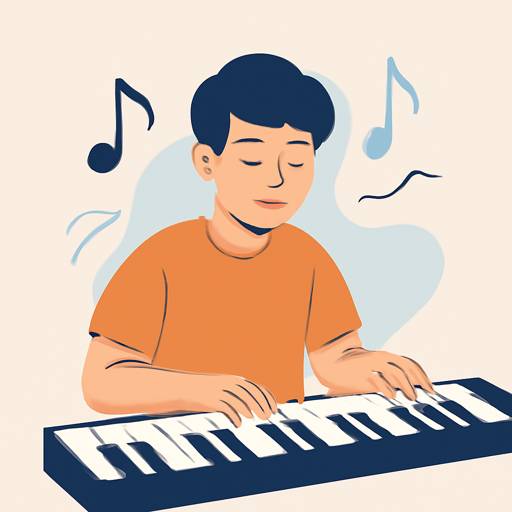
Parent partnership cements progress. Five-minute micro-practice plans, laminated checklists, and short video prompts help families sustain momentum without battles. Celebrate generalization: transferring a rhythm from tapping to keys, or a left-hand pattern from one song to another. Collaboration with therapists—OT, PT, SLP—aligns goals such as bilateral coordination, breath pacing, or turn-taking scripts. When seeking a specialist, families often look for a piano teacher for autistic child who uses neurodiversity-affirming methods, flexible curricula, and clear data tracking. That match transforms lessons from rote drills into a personalized, strength-based journey where mastery and joy grow side by side.
Real Lessons, Real Progress: Case Snapshots and Sub-Topics
Consider four snapshots that illustrate the range of outcomes when instruction is tailored. Liam, age 7, is non-speaking and loves maps. His sessions begin with a familiar “hello” motif on two black-key groups, then shift into a simple “map quest” where each chord is a location. Using AAC, he chooses “go to C island” or “visit A minor cave.” This framework embeds turn-taking and choice-making while building left-hand stability. Over months, Liam moves from single-note exploration to two-hand textures, demonstrating longer attention spans and initiating more musical ideas.
Ava, age 12, is hypersensitive to sound but drawn to patterns. Her digital piano stays at a low volume with over-ear headphones available. Warm-ups are tactile: hand stretches on a weighted ball, then silent key depressions to feel hammer travel without sound. She thrives on the predictability of arpeggio maps and triad inversions, learning them as geometric shapes across the keyboard. With consistent visual schedules and quiet verbal cues, Ava learns to regulate startle responses and grows comfortable performing for a single trusted listener.
Mateo, age 9, seeks movement and has boundless energy. His plan anchors high-intensity moments—percussion on the fallboard, big-bass ostinatos—to channel regulation, interleaved with short focused tasks. A metronome app with tactile buzz keeps tempo without overwhelming sound. Improvisation games reward attentive listening: “Copy my rhythm,” “Echo my shape,” and “Find the missing note.” After several weeks, Mateo demonstrates improved impulse control and can transition between activities with a two-step visual cue, carrying these skills into school music time.
Noor, age 15, experiences social anxiety and prefers independent projects. Composition becomes the pathway. Each week, Noor expands a personal theme using chord progressions, then records and layers parts in a DAW. Notation follows function—only what supports the creative goal is written. The result is a portfolio that showcases technical skill, theory knowledge, and emotional storytelling. When Noor is ready, a low-pressure “sharing circle” replaces a traditional recital, celebrating process over perfection and honoring autonomy.
These vignettes highlight core sub-topics: goal-setting, environment shaping, and progress monitoring. Goals stretch beyond repertoire lists to include regulation (steady breathing before playing), executive function (self-starting a warm-up routine), and communication (requesting repeats or changes). The environment flexes—lighting, seating, bench height, and sensory tools—so the student’s nervous system can settle into learning. Monitoring uses simple, objective markers: seconds of sustained attention, number of successful transitions, or mastery of a motor pattern across three contexts. Data is shared visually with the learner, turning progress into a collaborative game.
Equally vital is community. Duet playing with a sibling, co-creating with a peer, or joining a neurodiversity-affirming ensemble broadens social opportunities at each student’s pace. Alternative performance formats—video premieres, small studio circles, sensory-friendly showcases—reduce barriers while maintaining the pride of presenting art. When families and educators intentionally weave strengths, supports, and student voice together, the instrument becomes a living toolkit. In this context, piano lessons for autistic child learners and piano teacher for autism approaches are not mere accommodations—they are catalysts for creativity, confidence, and self-determined learning that echo far beyond the studio.

Born in Kochi, now roaming Dubai’s start-up scene, Hari is an ex-supply-chain analyst who writes with equal zest about blockchain logistics, Kerala folk percussion, and slow-carb cooking. He keeps a Rubik’s Cube on his desk for writer’s block and can recite every line from “The Office” (US) on demand.